
Traditional Marketing vs AI Marketing: What Small Businesses Need to Know in 2026
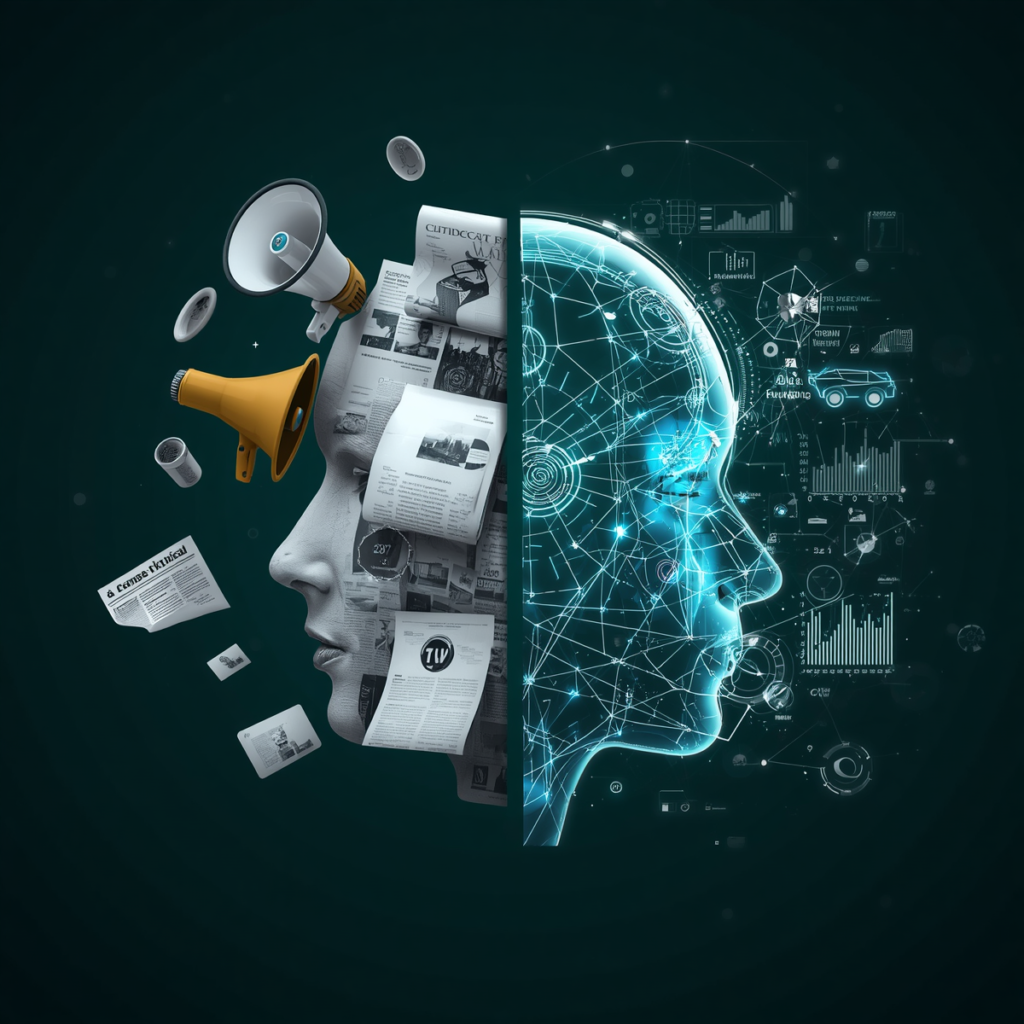
Let’s be honest — if you’re a small business owner in 2026, you’ve probably heard some version of this claim: “AI is going to replace traditional marketing entirely.” And if you’ve also heard the opposite — “AI is just a fad, stick to what works” — you’re not alone in being confused.
The truth, as usual, is somewhere in the middle. And it’s actually more interesting than either extreme.
Traditional marketing isn’t dead. AI marketing isn’t magic. But the small businesses that understand how to blend both are quietly pulling ahead of competitors who’ve picked a side.
This guide is going to cut through the noise. We’ll look honestly at what traditional marketing still does better than any AI tool, what AI genuinely changes about how marketing gets done, and — most importantly — how to figure out the right mix for your specific business in 2026.
First: What Do We Actually Mean by “Traditional” and “AI” Marketing?
Before comparing them, it’s worth being precise about what we’re actually talking about — because both terms get used loosely.
Traditional Marketing
Traditional marketing covers the methods that existed before digital and AI tools — and many that are still very much alive today:
- Print advertising — flyers, brochures, local newspaper ads, direct mail
- Out-of-home advertising — billboards, signage, posters
- Events and trade shows — exhibitions, pop-ups, networking events
- Broadcast media — TV and radio advertising
- Word of mouth and referrals — still one of the most powerful forces in small business growth
- In-person sales and relationship building — face-to-face interactions with customers and partners
Notice that last one. Word of mouth and personal relationships are “traditional” in the sense that they predate digital marketing — but they’re not going away. In fact, for many small businesses, they’re still the primary growth engine.
AI Marketing
AI marketing uses artificial intelligence tools to automate, speed up, personalise, and improve marketing activities. In 2026, this includes:
- AI writing tools — generating blog posts, emails, social captions, and ad copy (ChatGPT, Claude)
- AI design tools — creating graphics, videos, and visual content without a designer (Canva AI, Gemini Omni)
- AI scheduling and automation — posting content, sending emails, and managing campaigns on autopilot (Zapier, Buffer)
- AI analytics — understanding customer behaviour, campaign performance, and what’s working (Google Analytics AI features, HubSpot AI)
- AI chatbots — handling customer enquiries and lead qualification around the clock
- AI personalisation — tailoring emails, ads, and website experiences to individual users at scale
The key word in all of these is “faster.” AI marketing doesn’t fundamentally change what good marketing is — it changes how quickly and efficiently you can do it.
Head-to-Head: Traditional vs AI Marketing
Here’s an honest comparison across the areas that matter most to small businesses:
| Area | Traditional Marketing | AI Marketing |
| Speed | Slower — campaigns take days or weeks to plan and execute | Fast — content and campaigns can be created in minutes |
| Cost | Higher upfront costs (print, media buying, events) | Lower operational costs; most tools start free or low-cost |
| Content Creation | Manual, time-intensive, often requires outsourcing | AI-assisted first drafts ready in seconds — you refine |
| Personalisation | Limited — same message to broad audience | Highly personalised at scale — different message per segment |
| Human Connection | Strong — in-person trust and relationship building | Moderate — can feel automated if not carefully managed |
| Local Reach | Excellent — flyers, events, and signage work locally | Possible but requires more setup and targeting knowledge |
| Data & Analytics | Limited real-time insight — results take time to measure | Real-time data on what’s working and what’s not |
| Scalability | Hard to scale without significant budget increase | Scales easily — the same effort reaches far more people |
| Creativity | Fully human — original ideas, genuine brand voice | AI assists but still needs human direction and editing |
| Trust Building | High — face-to-face builds deep loyalty | Building — customers are still warming up to AI interactions |
What Traditional Marketing Still Does Better
Here’s something you won’t hear in most “AI is transforming everything” articles: there are real things traditional marketing does better — and ignoring them is a mistake for small businesses.
Building Deep, Trust-Based Relationships
No AI tool replaces the relationship you build with a customer when you meet them at a local event, follow up personally after a sale, or have a genuine conversation over coffee. This is especially true for service businesses — consultants, therapists, coaches, trades, healthcare, legal services — where trust is the product.
People do business with people they trust. And in 2026, with AI content flooding the internet, the businesses that show up in person, call their customers by name, and build real community are becoming more differentiated, not less.
Local and Community Visibility
If you run a café, a gym, a retail shop, or any business that relies on foot traffic and local community, traditional marketing methods still work extremely well. A well-placed flyer in the right neighbourhood. A table at the local market. Sponsoring a community event. These build the kind of neighbourhood familiarity that no amount of Google Ads can fully replicate.
Hyper-local word of mouth — someone recommending your restaurant to their friends — remains one of the highest-converting marketing channels in existence, and it’s fundamentally human.
Emotional and Sensory Impact
A beautifully designed brochure, a product sample, a live product demonstration, the smell of fresh coffee at your pop-up stall — these create emotional and sensory impressions that digital marketing simply cannot replicate. For certain industries (hospitality, food and beverage, luxury, wellness), the physical experience is the marketing.
The honest takeaway: If your business growth depends on trust, local presence, or in-person experience — don’t abandon traditional marketing. AI won’t replace what it can’t replicate.
What AI Marketing Does That Traditional Marketing Can’t
On the other side of the ledger, AI marketing has genuinely transformed what’s possible for small businesses with limited time and budget. Here’s where AI has a clear, undeniable edge.
It Removes the “I Don’t Have Time” Problem
The number one marketing problem for small business owners isn’t strategy — it’s execution. You know you should be posting consistently on social media. You know you should be sending a monthly newsletter. You know your website blog needs updating. But after a full day of actually running your business, who has the energy?
AI tools change this equation. A week’s worth of social media content used to take several hours. With AI, it takes 30 to 45 minutes — you direct the ideas, AI drafts the copy, you refine and schedule. The same is true for email newsletters, blog posts, and customer follow-ups.
For a small business owner who is also the sales team, the service provider, and the accountant — this is not a marginal improvement. It’s the difference between having a marketing presence and not having one.
It Makes Personalisation Possible at Scale
Traditional marketing sends the same message to everyone. AI marketing can send different messages to different people — based on what they’ve bought, how long they’ve been a customer, what they’ve clicked on, and where they are in their journey.
A small e-commerce business can now send personalised product recommendations after a purchase. A freelancer can automatically follow up with warm leads using a sequence that feels personal. A gym can send different messages to members who haven’t visited in two weeks versus members who come every day.
This level of personalisation used to require an enterprise marketing team. Now it requires a $20/month tool and an afternoon of setup.
It Lets You Compete with Bigger Budgets
One of the most frustrating realities of traditional marketing for small businesses is budget. A large competitor can outspend you on billboard space, TV ads, and print campaigns — and there’s not much you can do about it.
AI levels some of that playing field. A one-person business with ChatGPT and Canva can produce more content, more consistently, and of higher quality than a mid-sized company that’s still doing everything manually. The tools cost the same for everyone — what differs is how well you use them.
Real example: A solo personal trainer using AI to write weekly blog posts, create Instagram content, and send automated email follow-ups to trial class attendees can run a marketing operation that would have required a part-time marketing coordinator just three years ago.
It Tells You What’s Working — Immediately
Traditional marketing feedback loops are slow. You run a print ad and wait weeks to see if it moved the needle. AI-powered digital marketing gives you real-time data: which email subject line got more opens, which social post drove the most clicks, which landing page converted better.
For a small business with limited budget, this is enormously valuable. You stop guessing and start making decisions based on what’s actually working. Every pound or dollar you spend on marketing becomes more efficient.
The Real Answer: It’s Not Either/Or
The most successful small businesses in 2026 aren’t choosing between traditional and AI marketing. They’re using both strategically — letting AI handle the volume and efficiency side, while keeping the human, relationship-driven side firmly intact.
Here’s a practical way to think about it:
Use traditional marketing for: trust-building, local presence, in-person experiences, relationship-based sales, and anything where the human touch is the differentiator.
Use AI marketing for: content creation, consistency, automation, personalisation, data analysis, and anything repetitive that doesn’t require a human to do it every time.
The businesses that are struggling are the ones who either refuse to adopt AI (and are falling behind on content and efficiency) or who go full automation and lose the human warmth that made their customers loyal in the first place.
The winning formula: Human strategy + AI execution. You decide the direction, the voice, and the relationships. AI handles the drafts, the scheduling, the follow-ups, and the data.
A Practical Blended Marketing Plan for Small Businesses
Not sure where to start? Here’s a simple framework for blending both approaches — without needing a big budget or a marketing team.
For a Local Service Business (café, salon, gym, trades)
- Traditional: Attend one local networking event per month. Distribute seasonal flyers in a 2km radius. Ask happy customers for Google reviews in person.
- AI: Use ChatGPT to write weekly social media posts. Use Canva AI to design promotional graphics. Set up an automated email sequence for new customer enquiries.
For a Freelancer or Solo Consultant
- Traditional: Maintain genuine relationships with 10 to 20 key contacts through regular check-ins. Attend 2 to 3 industry events per year. Ask for referrals directly after successful projects.
- AI: Use Claude or ChatGPT to write LinkedIn posts and a monthly newsletter. Use Zapier to automate lead follow-up emails. Use Perplexity to research prospects before outreach calls.
For a Small E-commerce or Product Business
- Traditional: Participate in markets, pop-ups, or trade fairs where your audience gathers. Build relationships with complementary local businesses for cross-promotion.
- AI: Use AI to write product descriptions, email campaigns, and social content at scale. Use analytics tools to track which campaigns drive the most revenue. Automate abandoned cart emails and post-purchase sequences.
Recommended AI Marketing Tools for Small Businesses in 2026
If you’re ready to start adding AI to your marketing mix, these are the tools worth starting with:
- Claude (claude.ai): Best for writing thoughtful, nuanced marketing content — blog posts, email campaigns, strategy documents. Excellent for getting a genuine brand voice into your content.
- ChatGPT (chat.openai.com): Best for fast, varied content tasks — social captions, brainstorming, quick rewrites, and everyday writing.
- Canva AI (canva.com): Best for creating professional marketing visuals — social graphics, presentations, flyers — without a designer.
- Zapier (zapier.com): Best for automating repetitive marketing workflows — connecting your forms, email lists, and CRM without manual data entry.
- Gemini (gemini.google.com): Best for businesses in the Google ecosystem — integrates with Gmail, Calendar, and Docs for automated briefs and workflow management.
- Perplexity (perplexity.ai): Best for market research — getting cited, up-to-date answers about your industry, competitors, and customers.
The Bottom Line
Traditional marketing built your business. AI marketing can help it grow faster.
The businesses that will win in 2026 aren’t the ones that abandoned everything that worked and went all-in on automation. They’re the ones that kept the human relationships and trust that make customers loyal — and used AI to do everything else more efficiently.
If you’re a small business owner or freelancer reading this, the practical takeaway is simple: you don’t need to choose. Start by adding one AI tool to your existing marketing routine. See what time it saves. Then add another.
The goal isn’t to become an AI expert. The goal is to spend less time on the execution side of marketing — so you can spend more time on the human side. Which, as it turns out, is the part no AI tool can replace.
Does AI marketing work for local businesses?
Yes, with the right combination. AI tools are excellent for creating local content, managing social media, and automating customer follow-ups. Combined with traditional local marketing tactics like events, flyers, and word-of-mouth referrals, AI-assisted local marketing can be very effective.
What is the best AI tool for small business marketing?
For writing and content: Claude or ChatGPT. For design: Canva AI. For automation: Zapier. For research: Perplexity AI. For Google-integrated workflows: Gemini. Start with one, master it, then add others as needed.
Will AI replace marketing jobs?
AI is changing marketing roles, not eliminating them. Repetitive execution tasks are being automated. But strategy, creativity, relationship management, and brand judgment remain firmly human. Marketers who learn to use AI tools are becoming significantly more productive — and more valuable.
How do I start using AI for my small business marketing?
Start with one tool and one task. A good first step: open ChatGPT or Claude, describe your business and audience, and ask it to write a week of social media posts. See what it produces, edit it to match your voice, and post it. Once that feels easy, add the next tool.