
How to Build an AI Marketing Team: A Step-by-Step Guide
The strategic playbook for pairing AI agents with human creativity — so your marketing team works smarter, faster, and without losing its soul.
⚡ Quick Answer Building an AI marketing team means pairing the right AI agents with skilled humans — not replacing your team. The process involves 6 key steps: defining your goals, auditing your current workflow, researching AI tools, running pilots, integrating agents into your stack, and continuously refining. AI handles the repetitive; humans handle the irreplaceable.
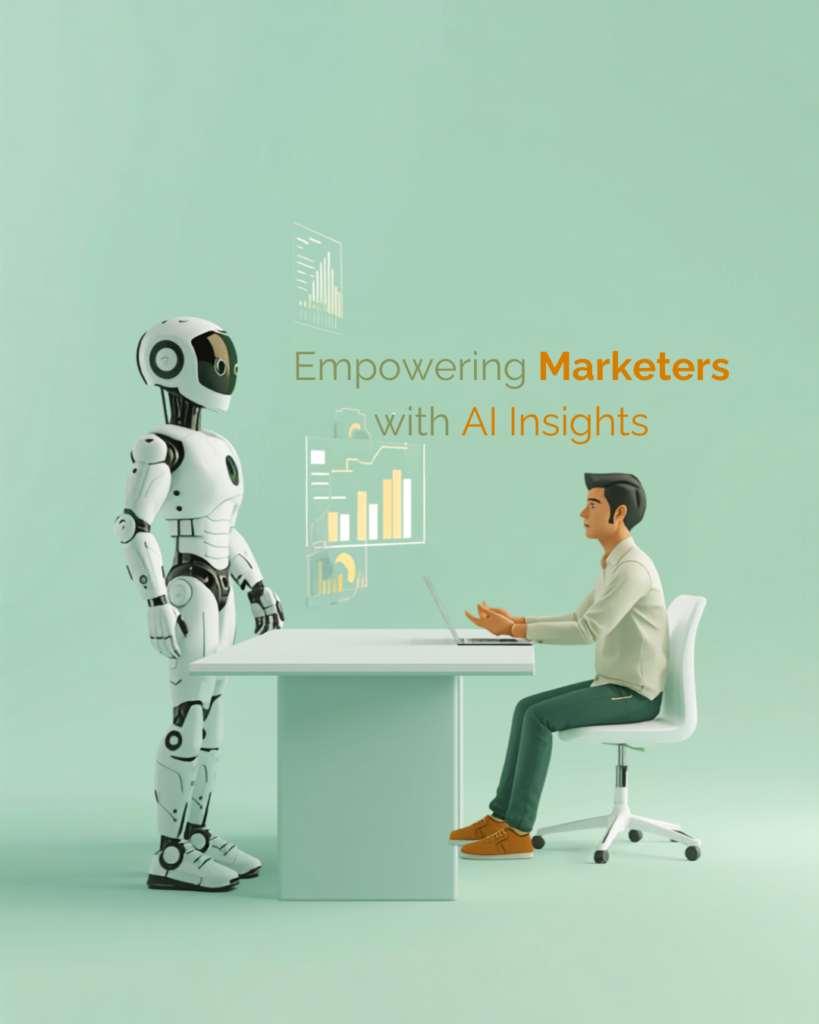
In 2026, “AI marketing team” doesn’t mean a room full of robots writing your emails. It means a lean, high-performing squad where AI agents handle the heavy lifting on execution — data, scheduling, testing, reporting — while your human marketers focus on what AI genuinely cannot do: strategy, relationships, brand instinct, and creative vision.
This guide walks you through how to build that team from scratch. Whether you’re a solo marketer, a small business owner, or managing a growing content operation, these six steps will help you research, pilot, and integrate AI agents without losing the human element that makes your marketing actually work.
🧠 The Truth About AI and Human Roles in Marketing
AI agents are extraordinarily powerful at executing known tasks at scale. But the reason your audience connects with your brand — the empathy, the cultural awareness, the instinct for what feels right — those belong to humans. The best marketing teams in 2026 aren’t choosing between AI and people. They’re pairing them deliberately, so each does what it’s best at.
Step 1: Define Your Marketing Goals First
Before you look at a single AI tool, you need absolute clarity on what your marketing team is trying to achieve. AI agents are powerful amplifiers — but they amplify whatever direction you give them. Unclear goals produce AI-powered noise, not results.
Questions to answer before you start:
- What are your top 3 marketing priorities this quarter?
- Where does your team currently spend the most time on repetitive tasks?
- What metrics define success for you — traffic, leads, conversions, engagement?
- What’s your current content output, and what volume do you need to reach?
- Are you trying to scale content, improve targeting, reduce ad spend, or all three?
Only once you’ve answered these questions should you move to the next step. The most common mistake in building an AI marketing team is buying tools first and figuring out fit later.
Step 2: Audit Your Current Marketing Workflow
Map out every core task your marketing team performs week-to-week. This is your AI opportunity inventory — the places where agents can save time, reduce error, and scale output.
How to run your workflow audit:
- List every recurring marketing task (content writing, scheduling, reporting, research, etc.)
- Estimate how many hours per week each task takes
- Rate each task: Is it rules-based and repetitive, or does it require judgment and creativity?
- Flag tasks that are bottlenecks — where speed or volume is limiting your results
- Identify tasks where consistency matters more than creativity (e.g. social posting, A/B tests)
The tasks that are repetitive, rules-based, and time-consuming are your top candidates for AI agents. Tasks involving nuanced judgment, brand voice, crisis response, or stakeholder relationships are where your humans stay in charge.
Step 3: Research the Best AI Agents for Your Needs
Now you’re ready to look at tools — with a clear brief in hand. AI marketing agents vary enormously in focus, capability, and fit. Here’s a structured way to evaluate them.
The AI Agent Research Framework
- Define the job first: Before searching for tools, write a one-sentence job description for the agent you need. Example: “I need an AI agent that generates first-draft blog posts from a keyword brief.”
- Evaluate integration: Does the tool connect to your existing stack — your CMS, CRM, email platform, or analytics tools? Orphaned AI tools create more work, not less.
- Check for brand voice training: Can the tool learn your brand tone, or does every output need heavy editing? This matters most for content and copy tools.
- Test output quality before committing: Most reputable AI marketing tools offer free trials. Use them with real briefs from your actual workflow.
- Assess human override capability: The best AI agents make it easy for humans to step in, edit, reject, or override outputs. Avoid tools that make this friction-heavy.
- Review data privacy terms: Understand what happens to your content, customer data, and prompts. This matters especially for tools handling CRM or email data.
AI Agent Categories & Top Tools to Evaluate
| Category | Example Tools | Primary Use Case | Key Evaluation Criteria |
| Content Generation | Jasper, Copy.ai, Claude | Writing, blog posts, ad copy | Ease of brand voice tuning |
| SEO & Research | Surfer SEO, MarketMuse | Keyword clusters, content briefs | GEO/AIO readiness |
| Social Scheduling | Buffer AI, Hootsuite AI | Auto-scheduling, caption generation | Multi-platform coverage |
| Ad Optimization | Smartly.io, Pencil | Creative testing, bid management | ROAS tracking integration |
| Email Marketing | Klaviyo AI, Mailchimp AI | Personalization, send-time optimization | Segmentation depth |
| Analytics & Reporting | Adverity, Tableau AI | Dashboard automation, anomaly detection | Data source connectors |
| CRM & Lead Scoring | HubSpot AI, Salesforce Einstein | Pipeline scoring, follow-up triggers | CRM integration fit |
Note: This landscape evolves quickly. Always check current reviews, pricing, and integration updates at time of evaluation. The tools above reflect the leading options in mid-2026.
Step 4: Run a Controlled Pilot Before Full Integration
Never roll out an AI agent across your entire marketing operation on day one. A structured pilot protects you from bad outputs going live at scale, and helps you calibrate the tool before it touches real campaigns.
Pilot design principles:
- Choose one specific use case per pilot — e.g. generating social captions for one platform only
- Run the AI in parallel with your human workflow for 2–4 weeks (don’t replace, compare)
- Define success criteria upfront: speed, quality score, human editing time, engagement rate
- Assign a human reviewer for every output during the pilot period
- Document what the agent does well, where it fails, and what prompting changes improve results
What to watch for: Outputs that are technically correct but off-brand. AI tools often pass a surface-level quality check but miss your brand’s specific tone, cultural references, or audience sensibility. This is a human judgment call — and it’s exactly why pilots matter.
Step 5: Integrate AI Agents Into Your Team Structure
Once a pilot succeeds, it’s time to formalize how AI agents fit into your team’s day-to-day. This isn’t just a tech integration — it’s an organizational design decision.
Roles that work well alongside AI agents:
- AI Content Strategist (human): Sets briefs, defines priorities, reviews AI outputs, maintains brand voice guide. This role becomes more important, not obsolete, with AI.
- AI Output Editor (human): Reviews and refines AI-generated content before publishing. Think editor, not proofreader — their job is to add the human layer AI lacks.
- AI Ops Manager (human): Manages the tools, monitors performance, runs prompt optimization, flags issues. A critical role often underestimated in early AI team builds.
- Data Analyst (human + AI): AI agents surface the data; humans interpret it in business context and decide what to do next.
Team integration checklist:
- Document which agent owns which task — avoid overlap and unclear accountability
- Create a human review gate for every AI output before it goes live
- Set up feedback loops so your team can flag poor outputs and improve prompts over time
- Hold a weekly team review of AI performance — what’s working, what needs adjustment
- Protect time for creative and strategic work that is explicitly human-only
Step 6: Continuously Refine and Scale
Building an AI marketing team isn’t a one-time project — it’s an ongoing practice. The tools evolve, your needs evolve, and your prompts and workflows should evolve with them.
- Review each AI agent’s performance monthly against your original success criteria
- Update your brand voice guide as your business grows — and retrain or re-prompt agents accordingly
- Stay current on new agent capabilities; a tool that wasn’t right six months ago may be right now
- Expand AI coverage to new use cases only when existing integrations are stable and producing quality output
- Never automate faster than your team’s ability to review, catch, and correct
Why Humans Cannot Be Replaced — And Shouldn’t Be
Let’s be direct: the AI marketing tools available today are genuinely impressive. They can generate content at scale, run hundreds of ad variations simultaneously, analyze performance data in real time, and handle scheduling across dozens of channels without breaking a sweat.
But none of that changes what AI fundamentally cannot do in marketing.
| Marketing Task | Best Handled By | Still Needs Human? |
| Content scheduling & posting | AI Agent ✅ | Human ✅ (for oversight) |
| Campaign strategy & direction | ❌ Not reliably | Human ✅ |
| A/B test execution at scale | AI Agent ✅ | Human ✅ (interprets results) |
| Brand voice and tone decisions | ❌ Not reliably | Human ✅ |
| SEO keyword research & tagging | AI Agent ✅ | Human ✅ (final review) |
| Crisis communication & PR | ❌ Not recommended | Human ✅ |
| Performance reporting & dashboards | AI Agent ✅ | Human ✅ (acts on insights) |
| Building audience trust & relationships | ❌ Not possible | Human ✅ |
| Ad creative variation generation | AI Agent ✅ | Human ✅ (creative direction) |
| Ethical decision-making | ❌ Not capable | Human ✅ |
What stays irreversibly human:
- Empathy — understanding how your audience actually feels, what they’re afraid of, what they hope for
- Cultural intelligence — knowing what will land, what will offend, and what will be ignored in a given moment
- Brand instinct — the felt sense of whether something is “us” or not, beyond any style guide
- Ethical judgment — deciding what your brand should and shouldn’t do, regardless of what converts
- Relationship-building — the trust that forms between a brand and its community over time
- Strategic vision — seeing where the market is going before the data shows it clearly
The marketers who thrive in an AI-augmented environment are not those who resist AI. Nor are they those who outsource everything to it. They’re the ones who understand clearly what belongs to the machine and what belongs to them — and protect both.
An AI agent can write ten versions of your email subject line in seconds. But whether that email strengthens your relationship with your audience or quietly erodes it? That’s a human call, every time.
Frequently Asked Questions
How much does it cost to build an AI marketing team?
Costs vary widely. Entry-level AI marketing tools start around $50–$150/month per tool. A lean AI-augmented team using 4–6 tools typically spends $300–$800/month on software. Enterprise-grade stacks can run $2,000–$10,000/month. Start with one or two high-impact tools and scale as you see ROI.
Do I need technical skills to implement AI marketing agents?
Most modern AI marketing tools are no-code or low-code. You need critical thinking and clear brief-writing skills more than technical knowledge. However, if you’re connecting tools via APIs or building custom workflows, some technical resource — or a tool like Zapier or Make — will be helpful.
Will AI agents eventually replace marketing jobs?
AI will reshape marketing roles, not eliminate them. Tasks focused on execution and repetition will be increasingly automated. But roles involving strategy, creative direction, audience relationships, and ethical decision-making are becoming more important — and more human. The marketers at greatest risk are those who don’t learn to work alongside AI effectively.
How do I evaluate whether an AI marketing tool is right for my business?
Use the 5-point framework from Step 3: check integration with your existing stack, test brand voice adaptability, run a real-brief pilot before committing, confirm human override capability, and review data privacy terms. Never buy based on demos alone — test with your actual content and workflow.
What’s the biggest mistake businesses make when building an AI marketing team?
Over-automating without adequate human review. Speed is AI’s great gift — but unchecked speed at scale means errors, off-brand content, or tone-deaf messaging reaching your audience before anyone catches it. The most successful AI marketing teams invest as much in their human review processes as they do in the AI tools themselves.
Final Thoughts
Building an AI marketing team in 2026 is one of the highest-leverage investments a business can make. Done well, it means your team can produce more, test more, and learn faster — without burning out.
But done carelessly, it creates noise: AI-generated content that sounds like everyone else, campaigns that convert but don’t connect, and a brand that slowly loses its voice under the weight of automation.
The six-step framework in this guide is designed to help you avoid that. Start with goals. Audit your workflow. Research tools with a clear brief. Pilot carefully. Integrate thoughtfully. Refine continuously.
And throughout all of it — keep the humans in the room. Not as supervisors of the machine, but as the irreplaceable creative and strategic force that determines whether your marketing actually matters.
AI is your team’s most powerful tool. You’re still the team.